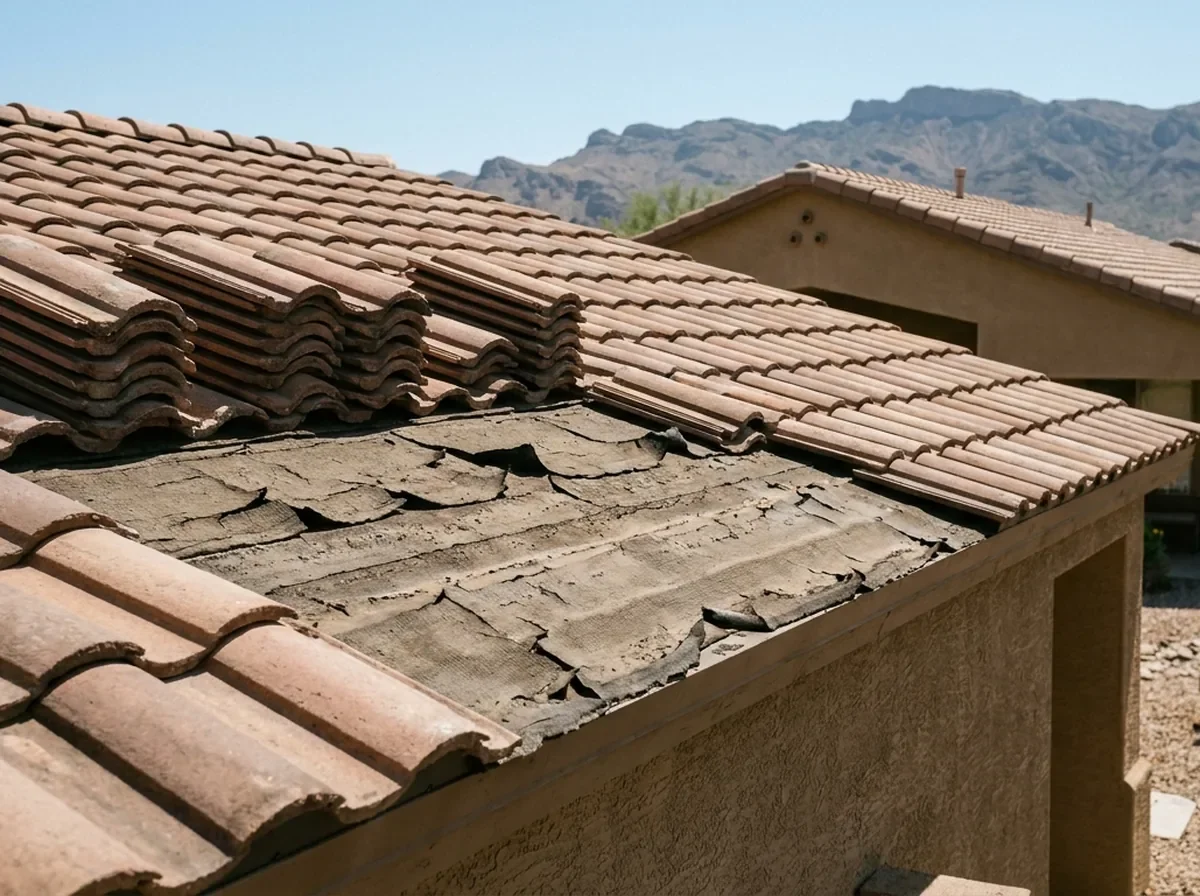
Roof leak repair in Goodyear, AZ on the roofs this city actually has: concrete tile over felt that the heat finishes decades before the tile does.
The classic Goodyear leak has nothing visibly wrong with it. Tile sheds water but it is not the waterproof layer; the felt underneath is, and felt is finished at 15 to 20 years in this heat while the tile above it has another thirty in hand. So a perfect-looking roof on a twenty-year-old house is exactly the roof that leaks.
Leak repairs across the Phoenix metro run an estimated $550 to $2,500, with small fixes from around $175. Those are Arizona figures. What decides where in that range your job lands is not the size of the stain, it is whether the leak is a failed detail or the first symptom of failed underlayment.


Leak repairs across the Phoenix metro run an estimated $550 to $2,500, with small fixes from around $175. Where in that range your job lands is decided by one thing: whether this is a failed detail or the first symptom of failed underlayment. Locally, the build date of the house moves a quote more than the leak does. It dates the felt, and the felt decides whether you are buying a repair at the bottom of these ranges or a re-felt at $4 to $6 a square foot. Any quote that has not established which is guessing.
A single identifiable cause on a roof whose felt still has life in it -- a cracked tile, a flashing, a vent penetration. On a house under fifteen years old that is the usual answer and it sits at the bottom of the range.
Underlayment that has gone brittle, because then the leak is not in one place. A two-story roof. Sealant from a previous attempt that has to come off first. And a discontinued tile profile, which turns a small repair into a sourcing job.
When the felt is the fault. Patching a roof whose only waterproof layer is finished buys a season, and we will say so and price the re-felt instead rather than selling you the patch twice.
REQUEST A QUOTE
Complete the form and describe the work you need help with.
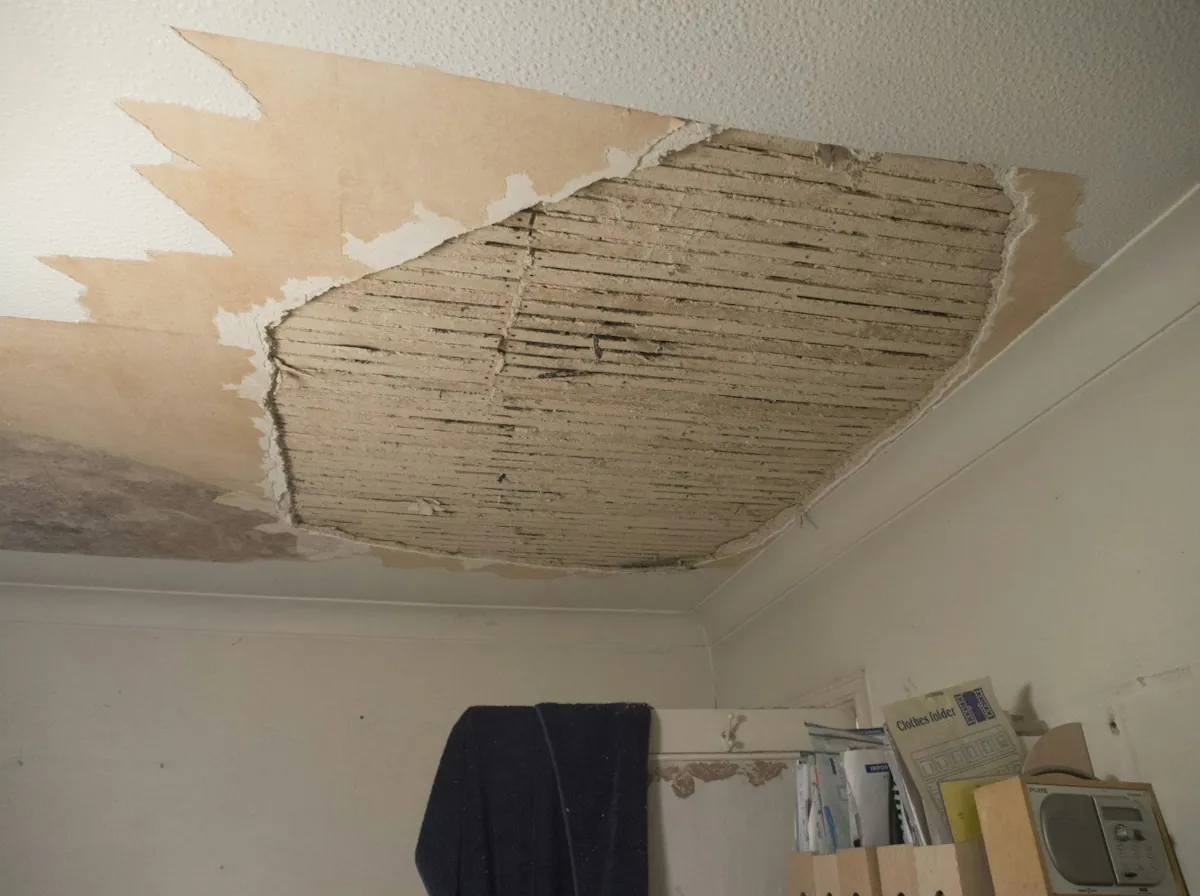
On a tile roof in this climate that sentence is not a contradiction. It is the normal situation, and it is the most expensive misunderstanding in this market.
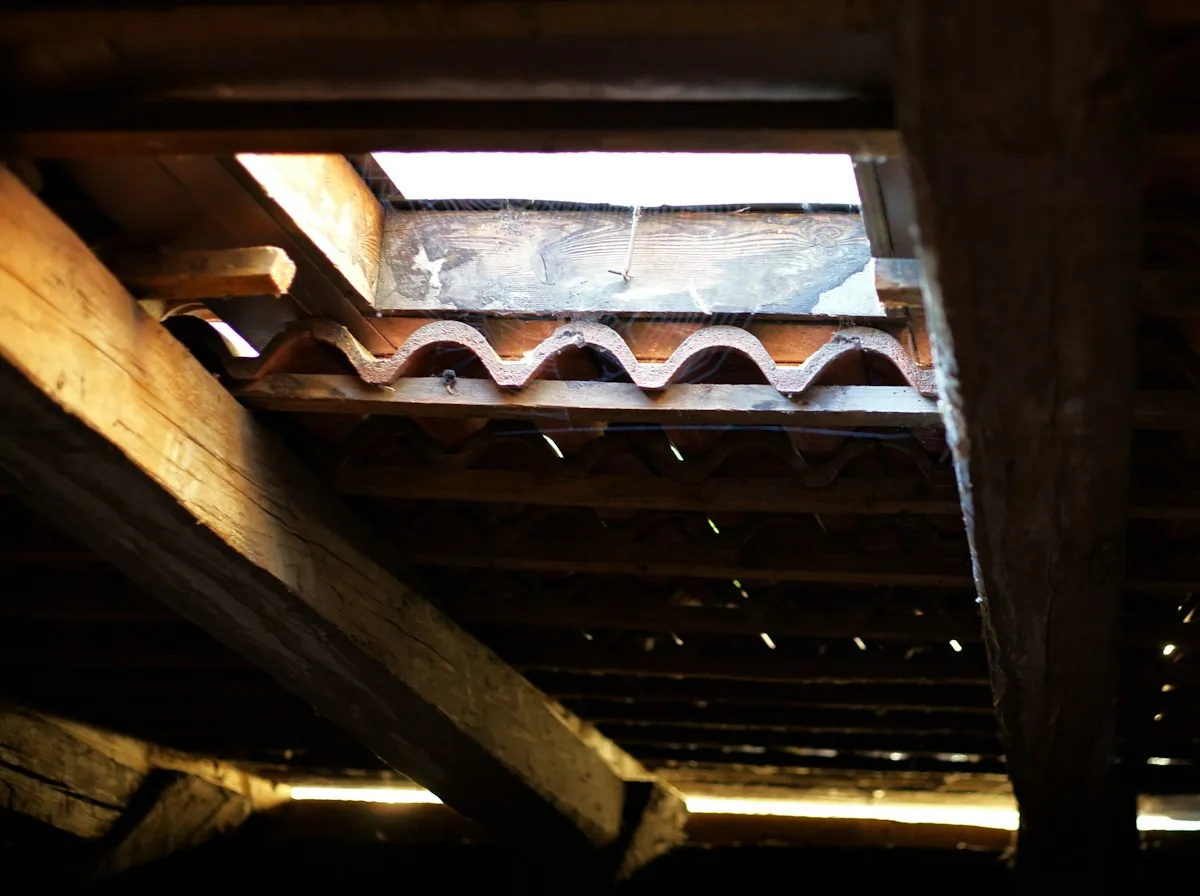
Concrete tile breaks the force of the water and sheds most of it. The felt underneath is the layer that actually keeps the house dry. So a roof with no cracked tile anywhere near the stain is not a mystery -- it is a roof whose waterproofing has finished.
Tile lasts fifty years and up. Asphalt felt lasts 15 to 20 in this heat, or 20 to 25 if it was 30-pound. Synthetic runs 25 to 35. The same felt manages thirty years in a coastal state; ultraviolet and heat are what halve it here.
Before anybody climbs a ladder, the age of the house tells you which conversation you are having. Under fifteen years: look for a detail. Past twenty on original felt: look at the felt. That is not a shortcut, it is what the materials do.
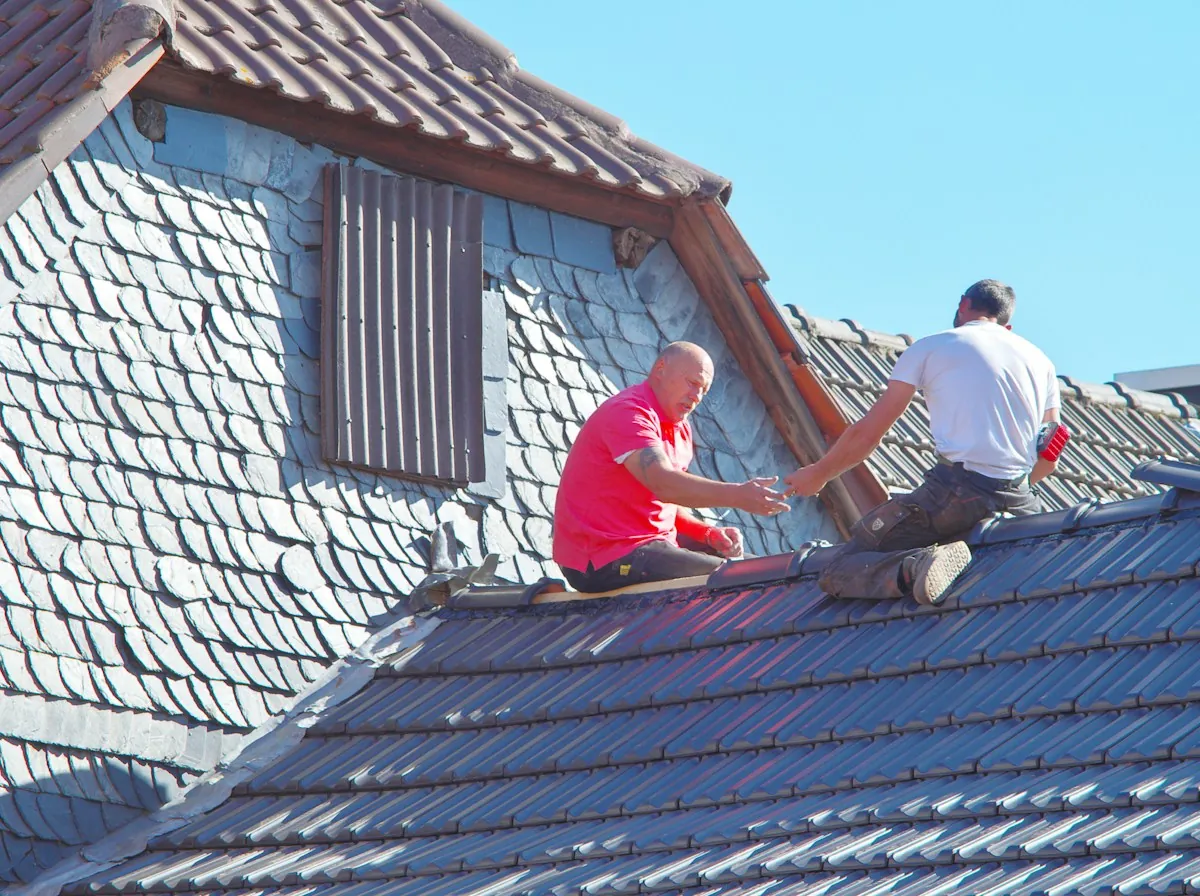
Tile off, stacked, new underlayment, same tile back on: $4 to $6 a square foot. Nobody has to buy tile again. If you are quoted a full replacement on a roof whose tile is sound, you are being quoted the wrong job rather than a high price for the right one.
Free inspection with tile lifted to see the felt, then a written quote. No curbside numbers.
Tell us roughly when the house was built and what the roof is: tile, foam or shingle. On a tile roof the build date is most of the diagnosis before anyone arrives, because it dates the felt.
Not a look from the ladder. Tile gets lifted away from the failure and in a couple of representative places, because the condition of the felt is the thing that decides whether you need a repair or a re-felt. Foam roofs get the coating assessed separately from the foam.
In writing, and specific: which detail, or which area of underlayment. Where a patch will only buy a season we say so and price both options, and the permit requirement is confirmed with the city rather than guessed at.
Tile stacked properly rather than dumped, a stated breakage allowance, the site left clean, and a before-and-after set that is yours whatever you decide to do next.
Including us. The first two take a minute and they separate most of a shortlist immediately.
Arizona requires an ROC license for roofing work of $1,000 or more including labor and materials, and the number has to appear on contracts, bids and advertising. R-42 residential, C-42 commercial, CR-42 both. The register is public and it takes a minute.
The single most useful question on this page. The condition of the felt is what decides between a repair and a re-felt, and it cannot be seen without lifting tile. A quote produced from a walk-round has not established the one thing that matters.
Some tile breaks during a lift. That is normal. Finding out the allowance after the work is not, and a bid that is silent on it is a bid with a variation built into it.
If a full replacement is proposed on a roof whose tile is sound, ask what is wrong with the tile specifically. If the answer is about the felt underneath, the job being quoted is not the job the roof needs.
A concrete tile roof is two products with two very different lives stacked together. The tile lasts 50 years and more. The asphalt felt beneath it lasts 15 to 20 in this climate, or 20 to 25 if it was 30-pound -- half what the same product manages in a coastal state, because heat and ultraviolet are what wear it out rather than rain.
And the tile is not the waterproof layer. It is a rain screen: it breaks the force of the water and sheds most of it, and the felt underneath is the membrane that actually keeps the house dry. So the roof that leaks in a monsoon cell with no cracked tile anywhere near the stain is not a mystery. It is a roof whose only waterproof layer has gone brittle.
Goodyear makes this more predictable than almost anywhere. The housing here went up from the mid-1990s onward, subdivision by subdivision, so the felt reaches the end of its life in waves too -- whole streets inside a season or two of each other. If a neighbor has just had a leak, that is information about your roof, not a coincidence. The job is usually a lift and re-felt at $4 to $6 a square foot, with your own tile going back on.

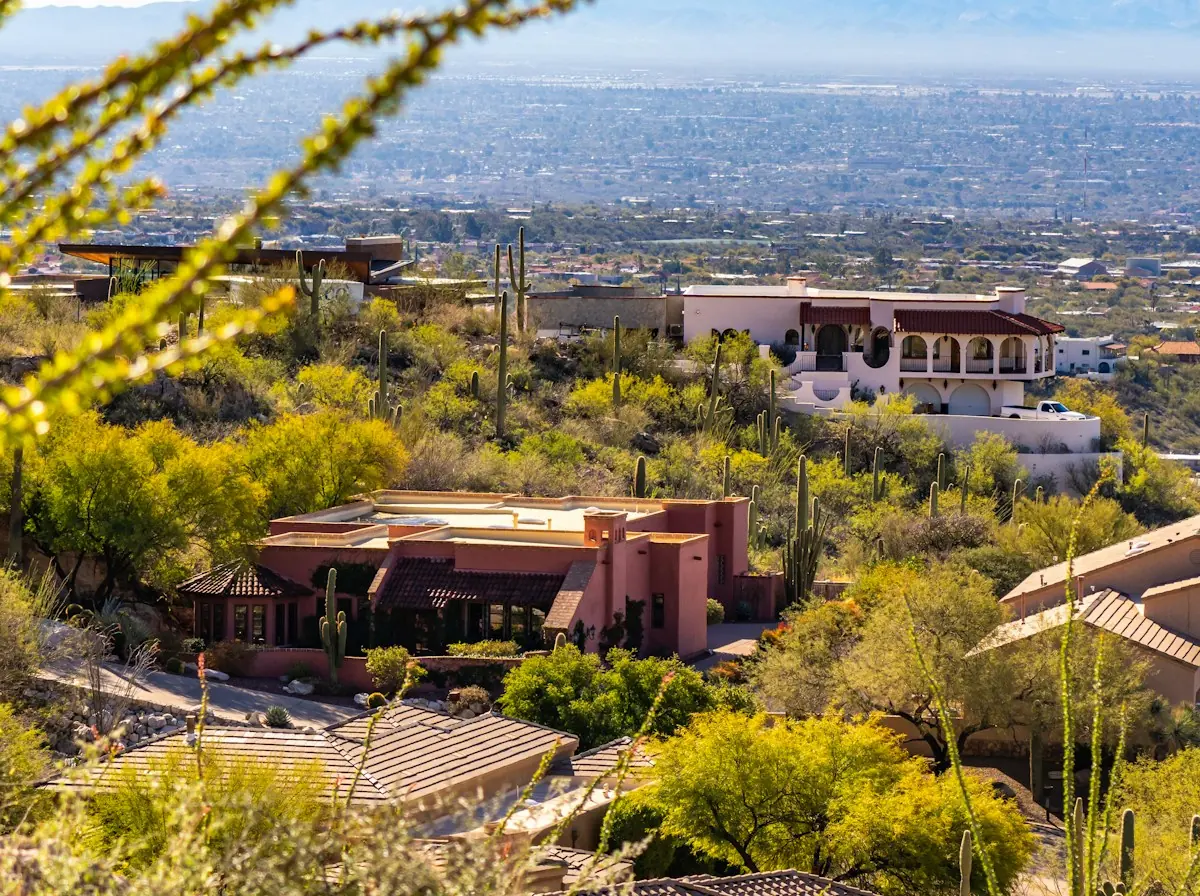
A West Valley city that grew from a farming town into one of the fastest-expanding places in Maricopa County, almost entirely from the mid-1990s onward. Overwhelmingly post-1995 single-family housing, built subdivision by subdivision and almost all of it concrete tile over asphalt felt.
Because the city was built in waves, its roofs fail in waves. Felt gets 15 to 20 years in this heat while the tile above it has fifty, so whole streets reach the end of their underlayment within a season or two of each other. A neighbor's leak is genuinely predictive here.
Goodyear is young enough that almost no roof in the city has reached the end of its tile, and old enough that a great many have reached the end of their felt.

Goodyear community by community, plus Avondale and Litchfield Park. What decides the job here is when the subdivision was built, because that dates the felt.
The earliest phases, furthest into the felt window.
One community, twenty years of build phases.
Young roofs. A leak here is a detail, not the felt.
Gated, single story, and its own tile standards.
The newest here. Be skeptical of a re-felt quote.
Wider age range, and possibly a second underlayment.
Decades older, and not tile everywhere.
What people ask before they book, answered here.
Uphill of the stain, usually. Water enters at a lap or a detail, runs down the felt under the tile, and drops at the first low point or break it reaches -- which on a shallow tile roof can be several feet away. That is why the roof space is part of the survey.
Whichever is true, and we will show you. If the felt away from the leak is still sound, the patch is the right job and we price it. If it has gone brittle, a patch buys a season and we will say so rather than selling it to you twice.
Leak repairs run an estimated $550 to $2,500 across the metro, with small fixes from around $175. Per square foot of the area repaired it is roughly $3.50 to $12. A tile lift and re-felt is different work and prices differently: an estimated $4 to $6 per square foot, or roughly $8,000 to $12,000 on a 2,000 square foot roof.
Because the tile is not the waterproof layer. Tile is a rain screen; the felt underneath it is the membrane that keeps water out, and in this heat felt lasts 15 to 20 years while the tile above it lasts fifty. A roof that looks immaculate and leaks is the normal situation on a twenty-year-old house here, not a puzzle.
Usually just the underlayment. A lift and re-felt takes your tile off, stacks it, puts new underlayment and flashings down and reinstalls the same tile: $4 to $6 per square foot. Buying tile again is unnecessary on almost every roof in this city, because concrete tile lasts fifty years and most of these houses are half that.
Free inspection, the felt assessed as well as the tile, and a lift and re-felt priced honestly against a patch.